
October 30, 2026 — Maverick Pools
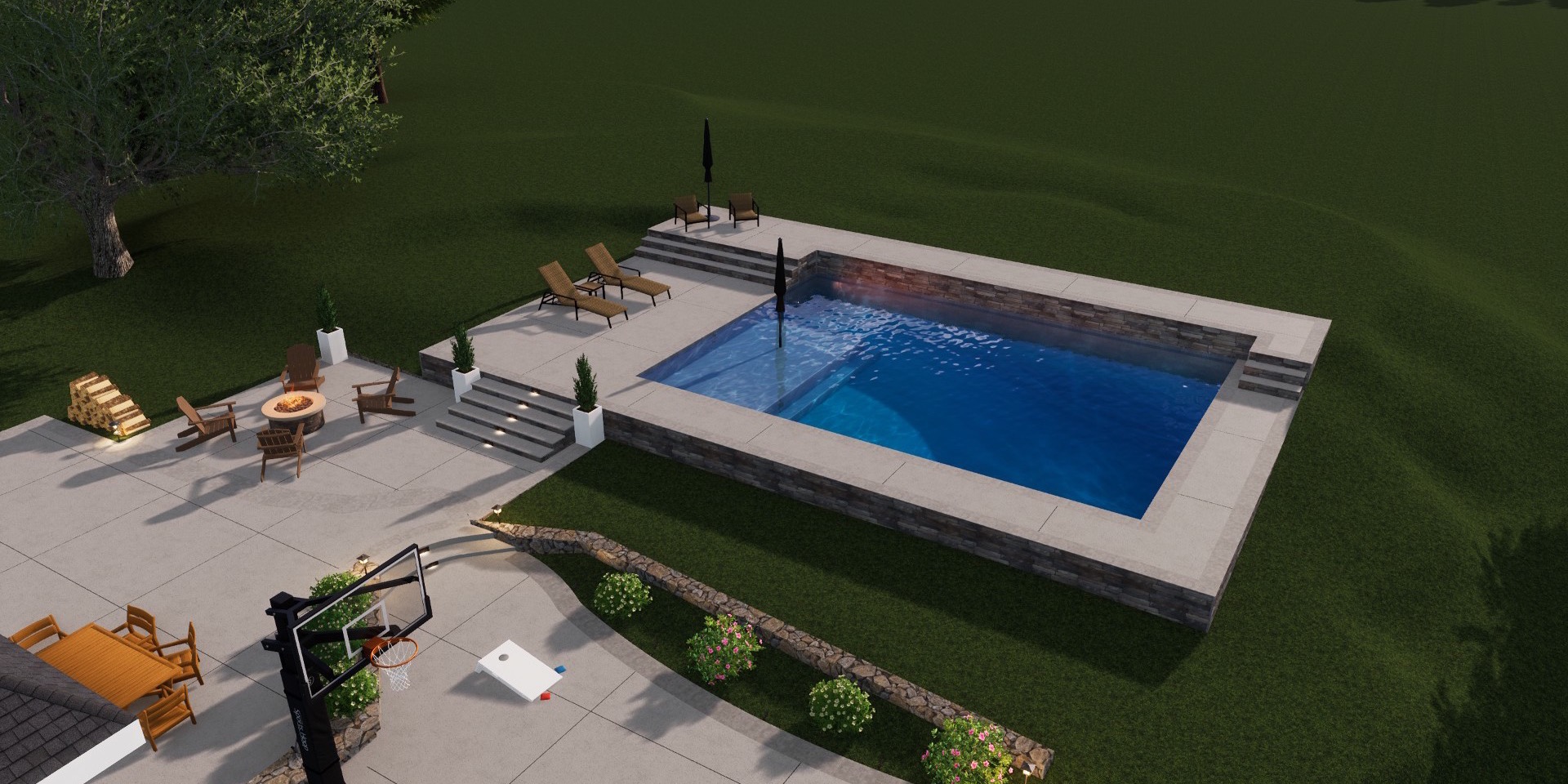
Short answer: yes. Every residential inground pool built in Idaho requires a safety barrier, and in most cases that means a fence. Here is what Idaho law requires, how cities in Treasure Valley apply those rules, and what you need to plan for before construction begins.
Idaho has adopted the International Residential Code (IRC), and the barrier requirements for residential pools flow from that code. The rule is straightforward: every outdoor residential swimming pool must be completely surrounded by a barrier that complies with the barrier section of the IRC. The barrier is meant to restrict access to the pool by young children.
The IRC barrier section covers:
Each city in the Treasure Valley applies these rules at permit review. Your site plan must show the barrier, its location relative to the pool and property lines, and gate placement.
Ada County’s pool permit application lists an automatic power safety cover as an alternative barrier option, alongside a fence. If a cover is used as the barrier, the City of Boise asks that it be shown in the pool plan and the section view of your permit drawings.
A cover only protects anyone when it is closed. Many families choose both a fence and a cover for an extra layer of safety. The design and permit implications are different depending on which option you choose, so this is a conversation to have early in the design phase.
The barrier requirement affects your entire backyard layout: where the pool sits, where the fence line runs, where gates go, and how the deck and landscaping are arranged. A fence that runs the wrong line can cut off access to the rest of your yard or create an awkward patio layout.
We design the fence, gates, easements, and pool as one cohesive plan from the first sketch. If your neighborhood has an HOA, the fence also has to meet the HOA’s design guidelines, in addition to the building code requirements, so we review those together.
The barrier is one item on your pool permit checklist. Pool projects in Boise, Meridian, Eagle, Nampa, Caldwell, Kuna, and the rest of Treasure Valley also require:
We manage the full permit package on your behalf, including barrier planning, so nothing gets missed.
Is a fence required around every pool in Idaho?
Yes. Idaho has adopted the IRC, which requires a safety barrier meeting the IRC requirements around every outdoor residential swimming pool. Local building departments in Treasure Valley cities apply these rules at plan review.
How tall does a pool fence need to be in Idaho?
The IRC requires a minimum height of 48 inches above grade on the side facing away from the pool.
Can an automatic pool cover replace a fence?
It can be used as an alternative barrier option in some jurisdictions, including Ada County. The cover must meet the IRC’s performance requirements, and it must be shown in your permit plans. Many homeowners choose both a fence and a cover for added safety.
Who designs the barrier as part of the pool project?
We do. The barrier, gates, easements, and HOA guidelines are all part of your pool design from the first draft. You do not have to figure out the fence separately.
Every pool we build in Treasure Valley is designed with the barrier, easements, and permit requirements built in from the start. If you are thinking about a custom gunite pool in Boise, Meridian, Eagle, or anywhere in the valley, book a free design consultation and we will walk through every requirement with you.
Every project starts with a free design consultation.