
October 26, 2026 — Maverick Pools
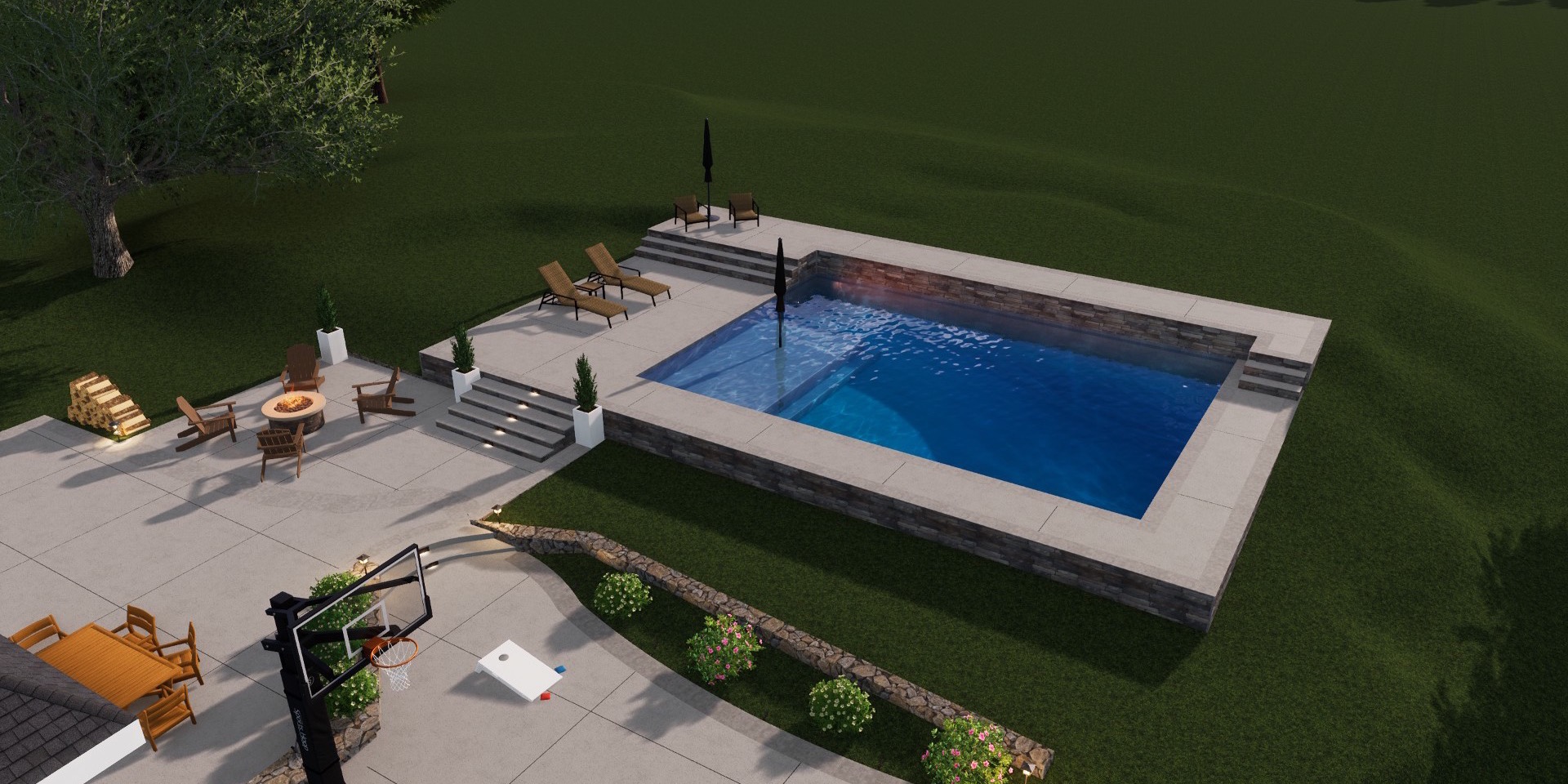
Just closed on a brand new home in Meridian, Star, Kuna or Eagle? Congrats! Right about now a lot of new homeowners are looking at a blank backyard and picturing a pool there next summer. The good news: a new build is a great place for a custom pool. The catch: new subdivisions come with a few rules and lines on the map that are easy to miss until they cost you time. Here is what to know before you start, from a local pool builder in Boise who handles these details on every project.
So much of the Valley’s growth is in new neighborhoods. In Meridian, Star, Kuna and parts of Eagle and Nampa, many backyards were dirt and a fence a year or two ago. That is an advantage, because there is no old landscaping or concrete to tear out. But newer lots also tend to be tighter, they are laid out around recorded easements, and almost all of them sit under an HOA with its own design rules. Planning around those three things up front is what keeps a pool project smooth.
Every subdivision lot has a recorded plat, a survey map that shows your property lines and any easements. Easements are strips of your yard where a utility, irrigation entity or the neighborhood has rights, and they usually run along the back or side lot lines. That is exactly where homeowners tend to want the pool.
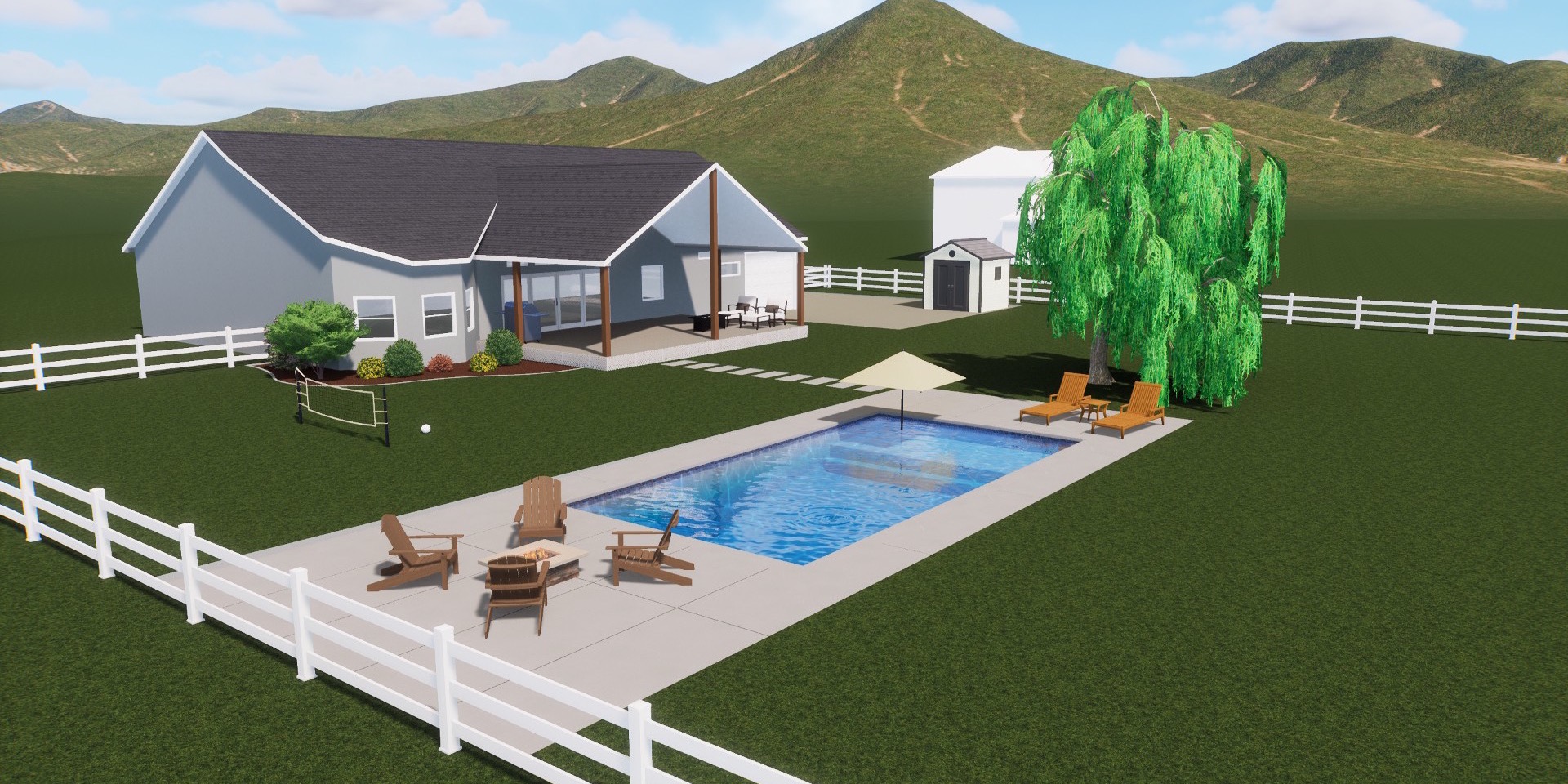
Here is why it matters. Eagle’s pool submittal requirements say it plainly: the site plan must show all easements, the distance from the outer pool wall to each property line and to the nearest easement, and “No portion of a pool wall or curbing shall be in any easement.” Boise’s residential pool submittal checklist also requires a site plan with dimensions from the pool to property lines and to other buildings, structures and retaining walls. Other Treasure Valley cities review site plans the same careful way, so plan on your pool’s location being checked against your lot lines and easements before a permit is issued.
How to find your easements:
Bring whatever you find to your design consultation. We will lay the pool out so it fits your lot, your setbacks and your easements from day one, instead of redrawing after a plan review comment.
Most new subdivisions have an architectural or design review committee, and their approval is often a hard requirement for your city permit. Eagle’s pool submittal requirements note that most subdivisions in Eagle require a letter of approval from the HOA at the time of submittal, and that the letter is required for plans to be accepted.
Typical things HOAs look at include pool and equipment location, fencing, how far equipment sits from neighbors, drainage, and sometimes noise from pumps and heaters. Every HOA is different, so read your CCRs and design guidelines first. Our HOA approval guide walks through what to submit and when, and Maverick helps clients put together a clean HOA design package so the committee has everything it needs.
If your home is brand new, or still being finished, a quick conversation with your home builder can save headaches later:
New subdivisions have fresh utility lines running through them, and some are buried closer to the surface or in different spots than people expect. Idaho law requires anyone excavating to get underground lines located first. According to Idaho Digline, excavators must give notice at least 2 business days but no more than 10 business days before digging, and the path of excavation is pre-marked with white paint. Line marking is provided for free by the local utility companies. Maverick handles locate requests as part of every project, so you do not have to.
Gunite pools are built in place, so cities require engineering that is specific to your site. Boise’s checklist requires structural calculations stamped and signed by an Idaho licensed engineer for gunite, shotcrete and other built-in-place pools, along with a pool plan and a section view showing depth and reinforcement. Eagle’s requirements say engineered plans are site-specific and that generic engineering is not accepted. Eagle also requires electrical and mechanical approvals before the site and rebar inspection, and requires a building final, noting that a pool that is never finaled can end up with an expired permit.
Some lots need extra steps. In Boise, projects in a floodplain, on substandard lots, or in the Hillside overlay with significant grading may need Planning and Zoning approval before the building permit. In Eagle, pools in certain flood hazard areas need documentation from a registered design professional showing the pool can resist buoyancy and hydrostatic loads, plus a hydrostatic relief valve.
That is a lot of paperwork, and it is our job. Maverick prepares and submits the permit package, coordinates with our licensed Idaho engineer who stamps the structural calculations, and schedules the inspections. For the Boise side of things, our Boise pool permit guide goes step by step.
The ideal time to plan a pool is before your backyard is finished. Doing the pool first means no tearing out new sod, sprinkler lines or a fresh patio. Fall and winter are a great time to start the design, HOA review and permitting so you are lined up for construction as soon as conditions allow. If you have just moved in, you are in a perfect spot to plan now.
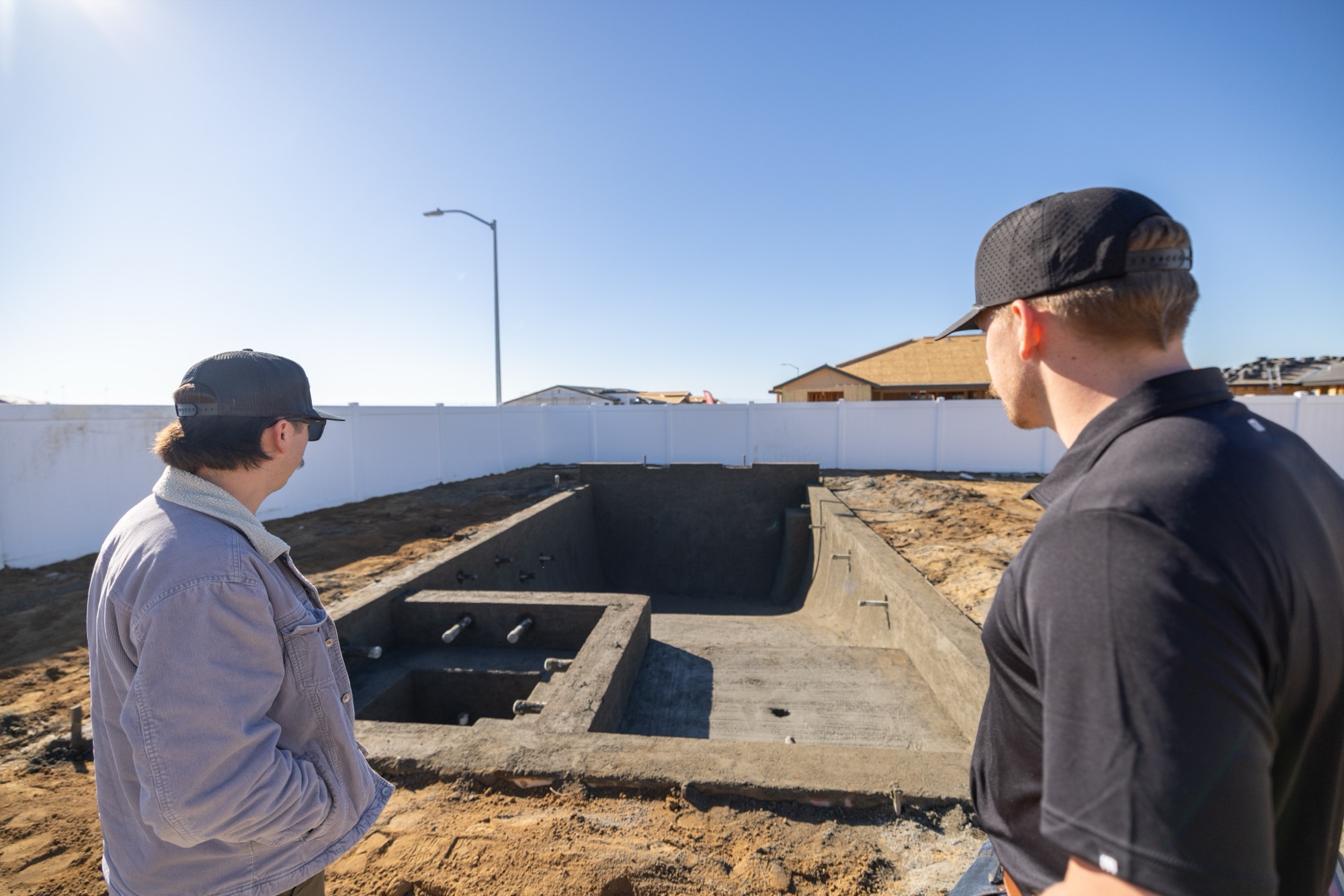
Every pool is custom, so cost depends on size, shape, features, access and what your lot needs. New builds can save some of the demolition and tear-out work an older yard may need. For a deeper look, read our breakdown of what a custom pool costs in the Treasure Valley. Financing is available through Lyons Financial, subject to lender approval. See our financing page for details.
Can you build a pool on an easement?
Usually not. Easements give utilities, irrigation entities or the neighborhood rights to that strip of land, and cities check for them during plan review. The City of Eagle, for example, says no portion of a pool wall or curbing may be in any easement. We design your pool to sit outside your recorded easements from the start.
How do I find the easements on my lot?
Start with your closing documents, which usually include the recorded plat. You can also find plat maps through the Ada County Assessor’s online documents, or ask your HOA or home builder for the lot drawing. Bring it to your design consultation and we will take it from there.
Do I need HOA approval before applying for a pool permit?
In many Treasure Valley subdivisions, yes. Eagle notes that most of its subdivisions require an HOA approval letter at submittal for plans to be accepted. Check your CCRs, and know that Maverick helps put together the HOA design package.
Should I put in landscaping before or after the pool?
After, at least in the pool area. Building the pool first avoids tearing out new sod, sprinklers, patios and fencing, and lets the landscaping be designed around the finished pool and decking.
Will a pool affect my new home warranty?
It depends on your builder’s warranty terms. Ask your home builder in writing how backyard construction affects coverage, especially around grading, drainage and the foundation, before work starts.
Who handles permits and inspections for a gunite pool?
Maverick does. We prepare and submit the permit package, coordinate the licensed Idaho engineer who stamps the structural calculations, and schedule the inspections through final.
A new home deserves a backyard you will actually live in. Whether you are in a brand new neighborhood in Meridian, Star, Kuna, Eagle, Nampa or Boise, we will help you sort out the plat, the HOA and the permits, then design a custom gunite pool that fits your lot perfectly. Design consultations are free, so book a free design consultation and let’s get your project lined up for next season!
Every project starts with a free design consultation.