
June 4, 2026 — Maverick Pools
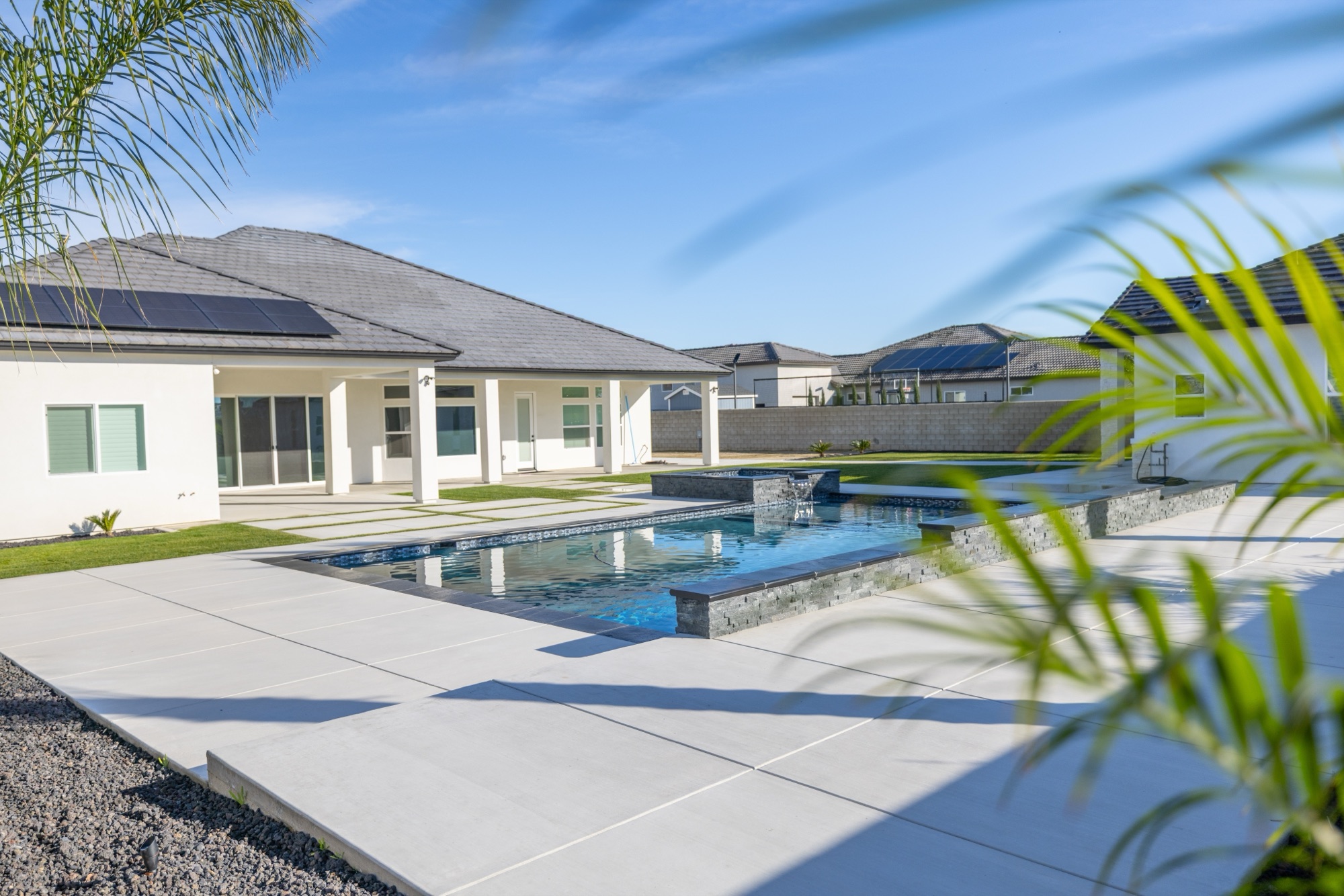
Meridian has been the fastest-growing city in Idaho for years running, and that growth has produced a large, active market for custom pools. We build consistently in Meridian — across newer subdivisions off Chinden, established neighborhoods near downtown, and the larger lots on the city’s southern edges. Here’s what homeowners in Meridian specifically should know before starting a pool project.
Meridian’s residential lots vary considerably by era and location. Older neighborhoods closer to downtown tend to have more modest lot sizes and mature landscaping — both of which require thoughtful design to fit a functional pool without overwhelming the yard. The newer master-planned communities on Meridian’s northern and western edges often have larger lots with more flexibility on placement and orientation.
One thing consistent across most of Meridian: the soil. Large portions of the Treasure Valley, including much of Meridian, sit on relatively predictable sedimentary soils — generally easier to work with than the more variable soils in foothills areas closer to Boise. That said, we always conduct a site assessment before finalizing structural drawings. Soil conditions affect rebar spacing and shell thickness, and assumptions in lieu of data lead to surprises.
A significant number of Meridian’s residential communities — particularly those built in the past 15–20 years — are governed by HOAs. Requirements vary, but common restrictions include:
We check HOA requirements early in the process — before design is finalized, not after. Redesigning to meet HOA requirements late in the process is an avoidable waste of time and money.
Meridian has its own building department and processes pool permits independently from Ada County. For residential pools you’ll need a building permit, electrical permit, and health department review. We handle and track all of these on your behalf.
Meridian’s building department has generally been one of the more efficient in the Treasure Valley, but review timelines still vary with workload. For planning purposes, budget for the full pre-construction phase — design, engineering, and permitting — to take a few weeks on a clean submission. A well-prepared, complete package moves through faster than an incomplete one.
We submit engineer-stamped structural drawings for every project. That completeness matters: incomplete submissions generate back-and-forth that delays approval and pushes your start date.
Meridian homeowners tend to prioritize outdoor living integration over purely maximalist pool design. We see a lot of interest in:
One consistent pattern: Meridian’s resale market is competitive, and buyers in the $500K–$800K range have come to expect outdoor spaces that reflect the home’s interior quality. An underbuilt pool in a premium Meridian neighborhood reads as an unfinished project. Finish level matters.
Meridian follows the same seasonal constraints as the rest of Treasure Valley — gunite work happens May through October, with most starts targeting May or June for a summer completion. The HOA review process, when required, adds a step that many homeowners don’t account for until it’s already delayed them.
Our consistent advice to Meridian homeowners: start earlier than feels necessary. A fall consultation positions you for a spring permit approval and a summer build. A spring call often means waiting until the following year or finishing in October with three weeks of swimming before the season ends.
The homeowners who get a full summer of use are the ones who started planning in the fall.
Every project starts with a conversation. We respond within one business day.